
The passing of few rock stars had such a profound effect on metal as that of Lemmy. When the Motörhead frontman died in December 2015, the tributes flooded in – not least from the world of extreme metal. In 201X, Metal Hammer spoke to the leading lights of that scene to find out just how Lemmy shaped extremity.

Look back at the state of rock and heavy metal prior to the emergence of Motörhead in the late 70s and it becomes clear just how much the band really changed things. If Black Sabbath laid the foundations for the entire metal genre, and Judas Priest finessed the formula, it was Motörhead who first inserted the genuine sense of aggression, attitude and rawness that would define extreme music in the decades that followed. The result was a sound that appealed as much to the punks as it did metal fans.
“I first discovered Motörhead on an old cassette in 1977,” recalls Tezz of crust/hardcore punk pioneers Discharge. “I was blown away; I kept playing it over and over. They were, and still are, a massive influence on me. As the drummer in Discharge I was influenced by several drummers, but definitely Philthy ‘Animal’ Taylor inspired me the most with his speed and technique. The band turned the ‘punk scene’ upside down and cleared the way for bands like us.”


“They were the band that started the crossover between metal and punk,” agrees Michel ‘Away’ Langevin, drummer of progressive thrashers Voivod. “In terms of metal they stayed away from the Dungeons & Dragons subject and were very street-oriented and that’s why they appealed to a lot of scenes. You would see a member of GBH wearing a Motörhead shirt and this eventually turned into thrash metal.”
“I don’t think thrash metal would be here without Motörhead,” concurs Nige Rockett of Onslaught, another band blending hardcore and thrash. “I first heard them in 1977 and heavy rock was kind of frowned on by the people we were hanging out with but they just seemed to blend the lot. It was heavier than the punk stuff but still had the attitude, energy and rawness of punk; the dirtiness of the bass and Lemmy’s voice.”
“I was already a fan of AC/DC and Judas Priest, but this was a step forward into heaviness,” adds Away. “Philthy became my favourite drummer immediately and I was crushed when I heard of his passing. When we formed Voivod everybody’s favourite band was Motörhead; the bass, the vocals and my drums were a clone of Motörhead. We pretty much covered every song by the band before we started writing our own material so alongside Venom they were the most influential band for Voivod.”

It’s actually hard to find any of the mid-80s metal pioneers that didn’t take their cues directly from Motörhead. Tom Gabriel Fischer of Hellhammer, and later Celtic Frost, is another notable example, and for him discovering the band would prove a pivotal moment in both his music and his life.
“For us Motörhead was a confirmation of something we were looking for, an ever heavier form of hard rock,” he explains. “There was no other band that had that impact, that violence in their music, the brutality, but it was always done with groove and style and it wasn’t primitive – or at least there was a certain charm in the primitiveness.
“They took some of the do-it-yourself style of the punk bands,” he continues. “All the hard rock bands of the time were really accomplished and had singers with multi-octave voices and that made it very difficult for young musicians to enter that field, much less compete with it. Motörhead really opened the doors not just to Hellhammer, but to many other bands and made us think maybe we too could express our rage, our frustration. I don’t think Venom would have happened without Motörhead, Hellhammer wouldn’t have happened without Venom, so all this set in motion so many things. Phil Taylor was also hugely influential in our own development, to the extent that we tried to get him into Celtic Frost in 1985.”

The influence of Motörhead stretches far beyond the early 80s and still reverberates in many young bands today, even if some aren’t aware of it. Perhaps most significant has been the specifics of the band’s rhythm section, with both distorted bass guitar and an extensive use of double bass drumming, the latter forming the foundation of much of the music we hold dear today and largely popularised by records such as Overkill.
Just listen to early Bathory or 80s Celtic Frost. Lemmy is everywhere. There’s something intangible about the attitude behind it all.
Enslaved’s Ivar Bjørnson
“The drums!” exclaims Abbath. “The drums, the vocals and yeah, is that a bass? Fucking hell, ‘guitar bass’! Apparently Philthy was sitting in the studio before Lemmy and Eddie came in, he had two bass drums and was going ‘duggadugga-dugga-dugga-dugga’ and then ‘duga-dag-duga-dag’ and then Lemmy comes in and he says, ‘Don’t stop, continue!’ and then they plugged in and they made the whole song on that fucking rehearsal. That’s my favourite Motörhead album, it’s definitely the coolest song.”
“I was at my half-cousin’s,” recalls Fenriz, who was soon to become a drummer himself, “and he had a drumkit – I didn’t have a kit before ’84, ’85. He put on the album No Sleep ’Til Hammersmith and I started playing along, so that was the album I first started playing to. That certainly raised the awareness of Motörhead for me, but it wasn’t until late ’89, ’90 that I really started listening to Motörhead, together with the other guys from Darkthrone. It influenced us – we have a track called In The Shadow Of The Horns, and that was the first time we brought a direct Motörhead influence into things.”

Another important black metal drummer, Mayhem’s Hellhammer, has himself become famous for his double bass work and hails Motörhead as an early influence.
“I immediately dug Philthy’s way of playing,” he says. “You know this raw, punk-esque playing with a lot of fast eight notes on the hi hat, à la Marky Ramone for instance. His actual drum setup was another thing I really liked and got inspired by. Usually the metal double bass setup consisted of four toms in a row – boring and predictable, really. Philthy got three! I thought it was super-cool instead of the boring four toms or fashionable two-tom glam style.”
As well as their sometimes-overlooked technical innovations, there was a surprising depth and maturity in the band’s seemingly straightforward songs that helped keep them relevant to their dedicated fans as they grew older and which perhaps partly explains their incredible longevity.
“What seemed to be a weakness at first – with the fact that he was 30 years old in what seemed to be a typical adolescent band – that became a strength later,” ponders Fenriz, “When all the adolescents grew up they understood, ‘This shit is still valid, it’s not something we just listened to when we are teenagers that couldn’t stand the test of time’. Usually you’re writing your way into music history when you’re 17, 18 up to 22. He was older and so had different things to lay on lyrically.”
“Over the years my deep love for Motörhead matured like some kind of fine wine,” confirms Alan Averill of Primordial. “Despite being a straight up rock’n’roll band there’s never been a gimmick or anything showy, but also there’s a subtlety and sense of history to Motörhead that maybe gets lost on a very young mind. I would say strangely enough they have had more influence over me over the last 10 or 15 years as I’ve returned to them.”
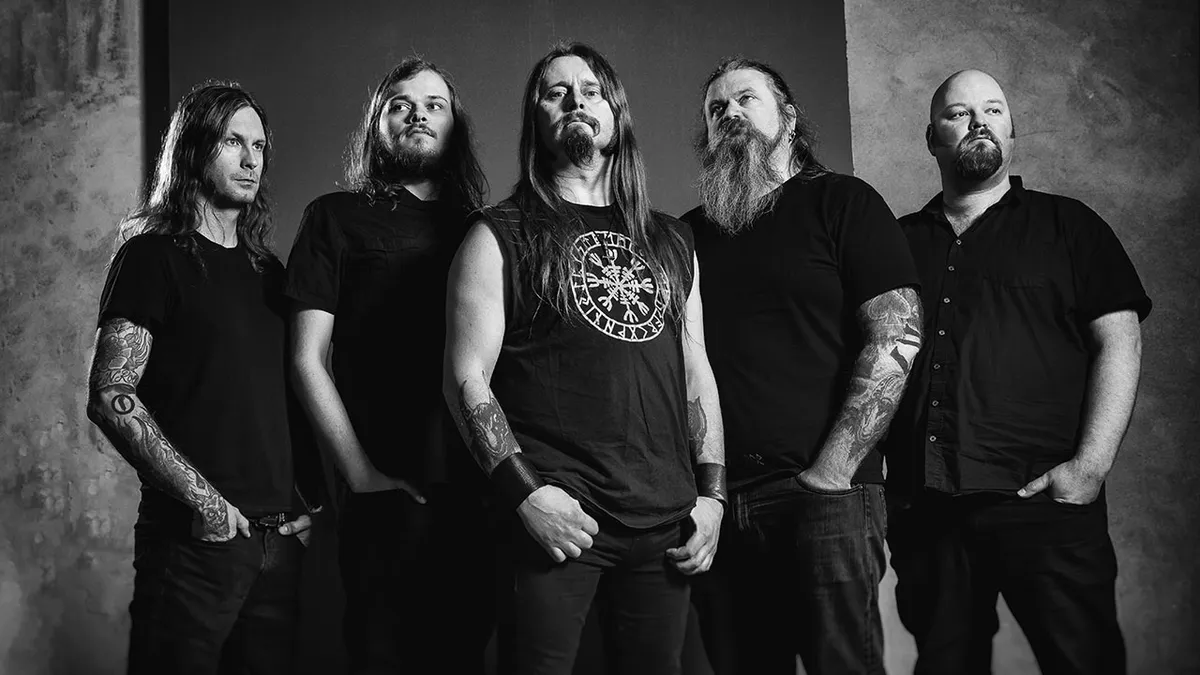
Of course, while Lemmy and Motörhead are sadly no more, their music – and musical legacy – certainly lives on. Perhaps most impressive of all is the tremendous variety of artists in whom the influence of this timeless music – and perhaps even more, the attitude of the larger-than-life personality behind the band – continues to manifest. One such example is Ivar Bjørnson of Enslaved, a band one might not immediately compare to Motörhead yet who are directly influenced by them.
He was always the ‘real bad guy’, which is a reputation you get if you do things your own way.
Watain’s Erik Danielsson
“Lemmy’s music and style has influenced us from day one,” he confirms, “and we still always have at least one part of each new album that is referred to as the ‘Motörhead part’. Let’s not forget Hawkwind either! They were also a very important to what Enslaved has become. Then there are our other main influences, who are also heavily influenced by Lemmy and co; Just listen to early Bathory, or 80s Celtic Frost. Lemmy is everywhere! There’s something intangible and almost esoteric about the attitude behind it all, both the sound and the larger-than-life-personality that was Lemmy. A total freedom from restrictions and inhibitions, and an ecstatic sonic drive that is primal, powerful and somewhat sexual in nature. To not be influenced musically and personally would be absolute madness.”

“I’m grateful for all the great music he’s written, the many times I’ve seen him perform and all the inspiration he’s given us,” says Erik Danielsson of Watain. “There were definitely things about Lemmy’s way of life that everyone in Watain would relate to. Compared to most of his contemporaries
he was always the ‘real bad guy’, which is a reputation you get if you do things your own way, all the way!”
“He was first and foremost a formidable artist,” concludes Satyricon’s Satyr, “He wrote some of the very best songs out there for decades. Add to that how known he was for being a good man. Gene Simmons put it well by saying he was unassuming, non-judgmental and with a heart of gold. That makes Lemmy a role model to all of us.”
Originally published in Metal Hammer issue 281 (February 2016)
