




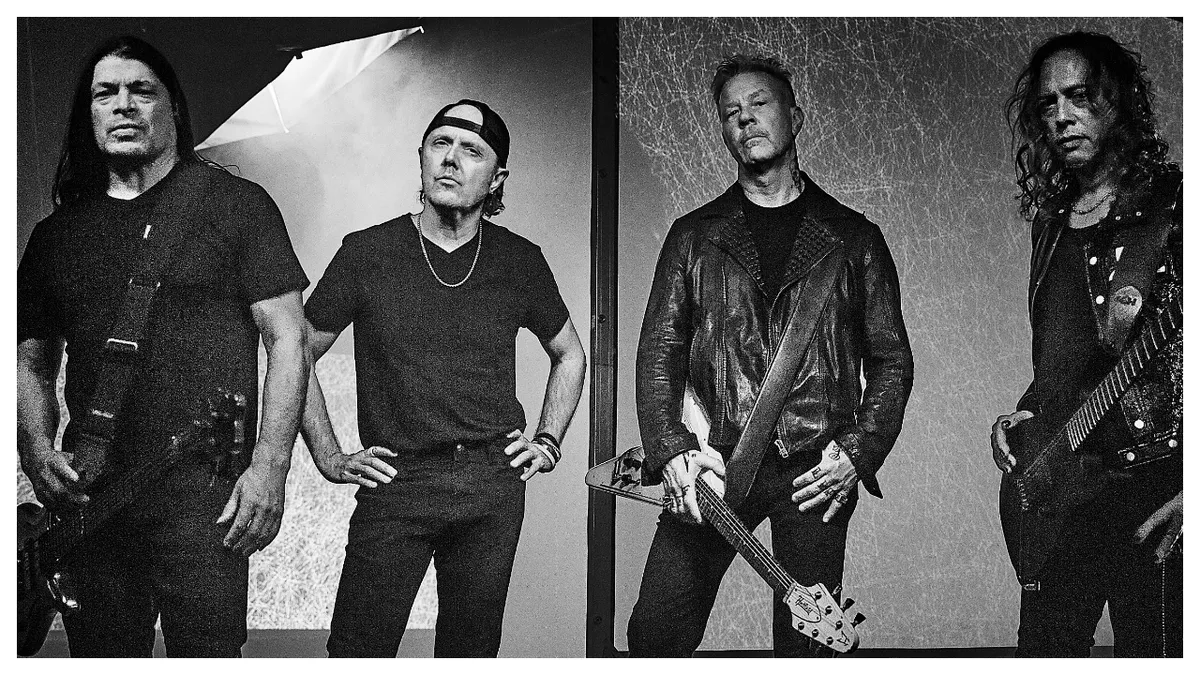
Think of a superlative and you can probably apply it to Metallica. Easily the biggest band in heavy metal history, they’ve sold more than 150 million albums worldwide and will fill any building that you put them in – including ones in Antarctica. It’s a level of success that was hard-won for the American foursome, earned by a string of some of the greatest albums ever made (no record collection is complete without Ride The Lightning, Master Of Puppets and their record-setting ‘Black Album’) and persevering through such hardships as the death of their classic bassist, Cliff Burton.
Singer/guitarist James Hetfield and drummer Lars Ulrich started the future Grammy-gobblers in 1981, after Ulrich placed an ad in L.A. paper The Recycler. They picked up lead guitarist Dave Mustaine and bassist Ron McGovney as they started their quest to mesh the NWOBHM of Iron Maiden and Diamond Head with the scrappy hardcore of the Misfits, then quickly became a cult sensation in southern California. After replacing McGovney with Burton and Mustaine (who’d soon form Megadeth to enact his revenge) with Kirk Hammett, they released 1983 debut album Kill ’Em All and went nationwide, supporting Raven across the US.
1984’s Ride The Lightning and 1986’s Master Of Puppets continued their climb, but it was nearly all derailed when Burton died in a bus crash aged 24. Wounded and grieving yet refusing to give in, the band hired Jason Newsted and released 1988’s …And Justice For All. The subsequent Damaged Justice tour saw them headline arenas, but that was nothing compared to what they did after 1991’s self-titled follow-up, AKA the Black Album. Turning their scrappy thrash jams into stadium-sized stompers, it topped charts in dozens of markets and thrust them into the biggest rooms on Earth. They became the kings of metal and, 35 years on, still hold the crown.
Even though the mid-90s proved treacherous, with fans spurned by the members cutting their hair and embracing blues rock on Load (1996) and Reload (1997), their critiques merely pinged off of Metallica’s armour. The first true threat to their existence since ’86 came in the early 2000s, when a creatively stifled Newsted left and Hetfield entered rehab. The band responded by hiring Robert Trujillo and releasing St Anger: another fiercely divisive effort that cast them back to the rough-’n’-ready garage days before their debut.
After Death Magnetic (2008) brought back the long-missed thrashing of old, Metallica are once again bulletproof. Hardwired…To Self-Destruct (2016) and 72 Seasons (2023) were well-received and the band cemented their generational status with multimedia experiments, including the feature film Through The Never. As they prepare to become the first metal band to host a residency at Las Vegas venue The Sphere, cast an eye over their entire discography of original studio albums (sorry, no covers projects or live releases allowed!).

11. St Anger (2003)
Is it predictable that St Anger is rock bottom of another list like this? Yup. Is it still justified? Sadly, still yup. Metallica’s most hated album is far from the complete write-off many would have you believe; Frantic and the title track still go hard, songs like Invisible Kid and cult fan fave Dirty Window could have been world class with more work and the countrified re-dub of All Within My Hands the band have experimented with in recent years shows there’s a decent little song hiding under there.
Of course, none of that can cover for compositions that feel messy and disjointed and one of the most infamously disastrous production jobs in metal history. Artistically, St Anger is an interesting chapter in Metallica’s career at least: a raw, ugly cry from a band on the edge. Musically? This just ain’t it, no matter how you try to paint it.
10. Reload (1997)
When Reload hits the mark, it does so in style. Fuel might be basic as hell, but it remains a wonderfully simple, full-throttle burst of heavy metal adrenaline; The Memory Remains packs not just one but two of Metallica’s most earwormy moments (both its iconic chorus and Marianne Faithfull’s ‘Da da da daaa da, da daaaa’ refrain); The Unforgiven II is a more than worthy sequel to its predecessor and an outstanding power ballad in its own right.
That all said, Metallica’s confidence in their leftover material at this time was just a tad too optimistic, because Load’s sequel is packing way too much filler. James Hetfield’s wonderful lyrical streak was at least still in full flow, but even he wasn’t enough to save Reload from feeling largely unnecessary.
9. Death Magnetic (2008)
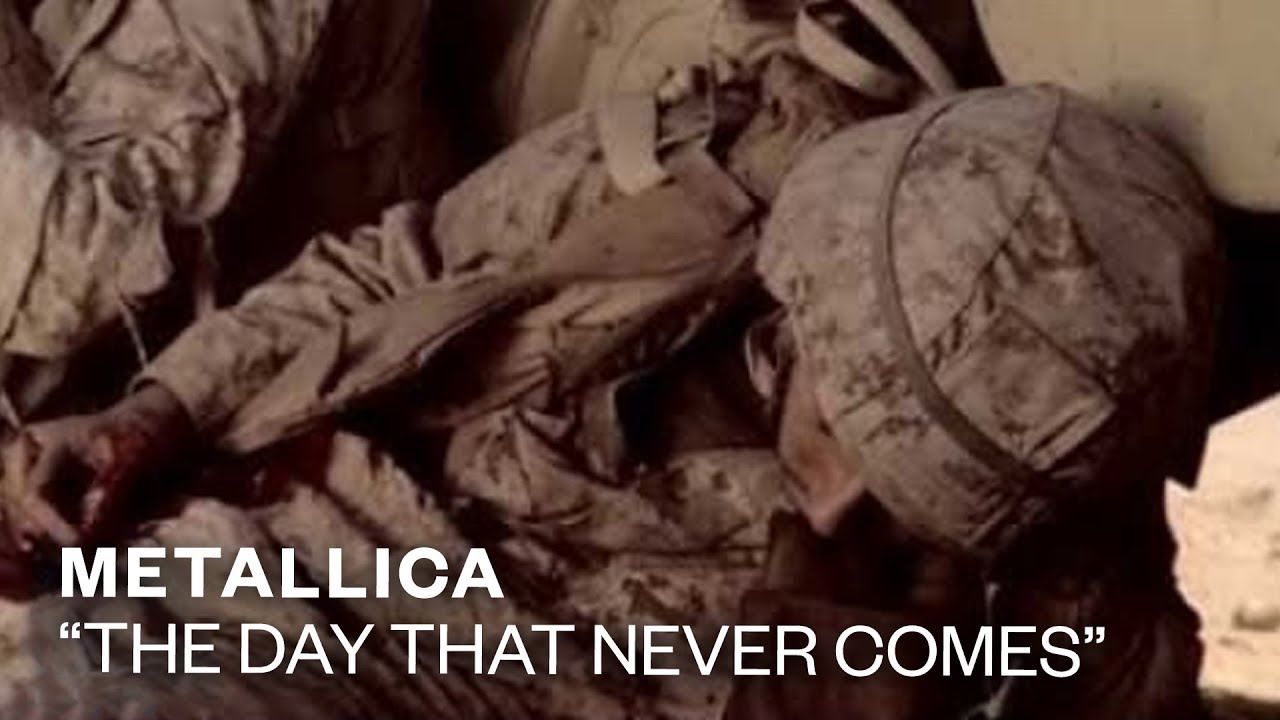
Critics were delighted with Metallica’s return to more traditional heavy metal fare (and solos!) when Death Magnetic arrived five years after the spectacular misfire of St Anger. In the cold light of day, it’s undoubtedly superior to its predecessor, featuring some full-on metal bangers (That Was Just Your Life, Cyanide) and two genuinely great power ballads in The Day That Never Comes and the severely underrated The Unforgiven III. Unfortunately, Death Magnetic as a whole is held back by two pressing issues.
Firstly, while a clear improvement on St Anger, the production is poor, Lars' drums still sounding like they were recorded using kitchen utensils. Secondly, and not for the first or last time, many of the songs just go too long. The End Of The Line, All Nightmare Long and The Judas Kiss are all solid tracks pulled down by meandering riff repetition, while forgettable instrumental Suicide & Redemption feels particularly self-indulgent at a whopping ten minutes. Decent, but far from a classic.
8. Hardwired…To Self-Destruct (2016)
Hardwired…To Self-Destruct was both a refreshing reminder of Metallica’s ability to pen top-tier metal hits and frustrating further evidence of the problems that come with their now trademark lack of self-restraint. The first half of the record in particular is filled with killer material, from the pulsating thrash assault of Hardwired and Moth Into Flame to the groovy, Load-ish power of Now That We’re Dead and epic, anthemic closing moments of Halo On Fire.
The second half, however, is a big letdown, the likes of Confusion, Am I Savage, ManUNkind and Murder One largely plodding and toothless (a particular shame given the latter’s status as a tribute to the legendary Lemmy Kilmister). Luckily, Spit Out The Bone turns up right at the end to finish things on a big high. What a rager.
7. 72 Seasons (2023)
For the third time in a row, Metallica put out an album that was solid as hell and packing plenty of great moments, but a little bogged down by a lack of incisive editing and at least a couple of tracks that just didn’t quite measure up. What can’t be in any doubt, however, is that 72 Seasons is the best-sounding Metallica album in over 25 years, the likes of its rollocking title track, the triumphant Lux Æterna and majestic album-closer Inamorata sounding truly stadium-sized under the bedded-in fingers of Greg Fidelman.
Papa Het’s voice also has no right sounding this good this far into his career, the band’s talismanic frontman bellowing like a vengeful mountain god during the pounding If Darkness Had A Son. A couple of minutes snipped off here and there and a little more ambition on the musical side of things and this could have been special. As it is, 72 Seasons is still pretty damn decent.
6. Load (1996)
Throwing caution to the wind following the absurd success of The Black Album and confirming that their thrash metal days were well and truly behind them (at least for now), Load saw Metallica dip their toes into everything from grunge to alt-rock to country. The result is a deeply fascinating record that unquestionably features some of the Four Horsemen’s most boldly realised leaps of faith; both the emotional Bleeding Me and album-closing epic The Outlaw Torn remain deservedly thought of as two of the most compelling compositions of the band’s entire career.
There are missteps for sure, and it’s a little too long overall, but for many, Load remains the point where Metallica were still truly blazing their own trail and letting ambition guide their creative impulses. It also features some of Hetfield’s most impactful lyrics, his introspective self-dissection reaching a new level of insight and raw vulnerability.
5. Kill ’Em All (1983)
Metallica would become far more layered and sophisticated in their songwriting as the 80s wore on, but even four-plus decades later, there’s still something so primal and satisfying about Kill ‘Em All’s snotty, ‘fuck-you’ attitude and relentless, proto-thrash assault. Smashing together Messrs Hetfield, Ulrich, Burton and Hammett’s love of punk rock fury and NWOBHM might with the subtlety of a brick to the groin (with some not inconsiderable help from a certain Mr Mustaine), the quartet kickstarted a movement and produced one of heavy metal’s all-time great debut albums in the process.
It’s easy to overlook just how stacked with classic ‘Tallica cuts Kill ‘Em All is, too: Hit The Lights, The Four Horsemen, Motorbreath, Whiplash, Seek & Destroy…plenty of bands could release all that, call it a day and consider their career a job well done. Incredibly, Metallica were only just getting started.
4. …And Justice For All (1988)
Depending who you ask, …Justice is for all intents and purposes the last of Metallica’s ‘thrash’ records, but sees the band turning their backs on the short, sharp shock stylings they had embraced with their debut in favour of the more epic fare that had become their bread-and-butter. The loss of bassist Cliff Burton can be felt keenly, not least in the controversial decision to completely flatten the mix of newcomer Jason Newsted’s contributions, but also in the subtle shifts away from more classical-leaning compositions that Burton had contributed to the band’s sound.
In its place is an almost prog-like approach to song structure, Metallica effectively crafting their own metallic symphonies with even the more straight-ahead fare of Blackened, …And Justice For All and The Frayed Ends Of Sanity having multiple movements and segments. Fans might still clamour for Justice For Jason, but …AJFA shows just how hard Metallica were fighting to reinvent themselves and push their artistry to new levels, towering ballad One awarding them a level of MTV-friendly success that few of their contemporaries have ever been able to match, certainly never surpass.
3. Metallica (The Black Album) (1991)
Responding to the overly-ornate compositions of their previous album, Metallica ground their sound into its essential dust on The Black Album, producing one of the best-selling records of all-time in the process. The band didn’t lose their thrash entirely – Through The Never and Holier Than Thou have the same bulldozer-through-a-China-shop power that Master Of Puppets used so excellently, while the likes of Sad But True, Enter Sandman and Wherever I May Roam deliver an enormity and instantly gratifying sound that better suited the arenas they were now playing.
Even with that, the band also found a whole new universe of depth and artistry with huge ballads like The Unforgiven and Nothing Else Matters, the latter even setting the stage for the band’s orchestral S&M thanks to some sublime arrangements by Michael Kamen. Naysayers might point to The Black Album as the point where Metallica stopped being Our Band, but therein lies the rub: Metallica were always too ambitious, too commercial and just too damn big to be satisfied with being the biggest fish in a small pond.
2. Ride The Lightning (1984)
There’s still a youthful rawness to …Lightning that captures the sparks flying between a youthful Hetfield, Ulrich, Burton and Hammett, the band already extricating themselves from their peers by sheer dint of having the finest songs and most ambitious compositions around. The album’s title-track is effectively a dry-run for the epic grandeur the band would ride so thoroughly on follow-up Master Of Puppets, while For Whom The Bell Tolls and Creeping Death awarded Metallica their first genuine arena-sized anthems.
There are also moments of respite and reflection; Fade To Black’s anti-suicide ballad might have ruffled feathers with the full-speed-or-nothin’ brigade, but the song’s beautiful composition, reflective lyrics and undeniable breakout headbangable moments showed that they had plenty to say and weren’t afraid to take chances on themselves.
1. Master Of Puppets (1986)
If you drilled down into the atomic structure of heavy metal, the genre’s evolution and its watershed moments, you’d probably find Master Of Puppets embedded at the core. Black Sabbath might have kickstarted the genre almost 16 years earlier, but Metallica codified metal with their third studio album in ways that are evident in the sheer mind-bending number of bands who have professed an undying love for the album over the subsequent decades.
Thrash gone cinematic, Master… refined and reinforced everything Metallica had done with their second album but bigger, better, harder and yes, more metal. From the delirious rampage of Battery to the tooth-gnashing militaristic blows of Disposable Heroes and careening violence of Damage Inc. to the iconic title-track, Metallica never again sounded as all-conquering as they would on Master Of Puppets, slower efforts like The Thing That Should Not Be introducing a sludgy dynamism that showed the band’s toolkit was varied.
Again wetting their beaks with ballad Welcome Home (Sanitarium), Metallica were carrying themselves away from being anybody’s back-up to instead be absolute champions in their own right. A tour with Ozzy Osbourne helped cement them as metal’s Hot New Things and even the tragedy of the crash that took bassist Cliff Burton couldn’t slow the unstoppable machine the band had set into motion by writing an album so undeniably massive and untouchable that it basically created a division between themselves and just about every other metal hopeful at that point.
A serious contender for the greatest metal album of all time, it’s no overstatement that the spirit of Master echoes in everything from Machine Head’s The Blackening to Gojira’s Magma and just about any other grandiose, epic metal effort put to tape. You can all rest easy: the Master is here.
Metallica’s residency at The Sphere, Las Vegas starts on October 1.

