


Fireball is often treated as the awkward middle child of the Deep Purple Mark II catalogue, sandwiched between the twin classics In Rock and Machine Head. Yet it was with Fireball, written and recorded amid relentless touring, mounting commercial expectations, personal frustrations and a determination not to repeat themselves, that Deep Purple tested just how far they could push the boundaries of hard rock. Encompassing foundational heavy metal alongside elements of progressive, jazz, psychedelic and even country rock, it was the band’s first album to top the UK chart and became another of their million-sellers.
Work on Fireball began in September 1970, barely three months after the release of In Rock. Martin Birch was again behind the recording desk, while production remained firmly in the band’s own hands. There was no stockpile of finished songs waiting to be recorded. Like its predecessor, Fireball would emerge gradually from the group’s collective writing sessions, taking shape over the following nine months at De Lane Lea and Olympic studios in London between an increasingly punishing schedule of British, European and American tour dates.
In this regard, the band’s success had become both a blessing and a burden. “In Rock succeeded so magnificently that it’s kept us working from that day to this,” Jon Lord reflected in early 1973. “We’ve really not had a chance to take stock since then.”
If In Rock had finally confirmed Deep Purple’s true musical identity, Fireball found them refusing to be confined by it. Lord recognised the change before the album had even been released.
“This album is more mellow than Deep Purple In Rock,” he told the NME in August 1971. “When we recorded that, we were a bit angry at the world because nobody had taken any notice of us.”

Instead of repeating or refining the formula that had transformed their fortunes, Fireball placed greater emphasis on the musicians’ collective strengths while pushing the emerging hard rock genre into unfamiliar territory.
The opening title track repurposes the momentum of Speed King (from In Rock), and takes its exhilarating sense of controlled chaos several steps further. Propelled by Ian Paice’s relentless – and revolutionary - double-bass drum pattern and Roger Glover’s elegantly striding bass line, it remains one of the most startling, high-energy performances of the Mark II era. Glover’s lunatic, fuzzed-up bass break, where you might reasonably expect a guitar solo, underlines the point that this is not a conventional guitar-hero album, so much as the work of five exceptional musicians discovering just how powerful they could be as a group.
Released as a single in October 1971, Fireball’s title track reached No.15 in the UK chart, a populist triumph which also pushed the hard-rock musical vocabulary towards territory that later generations would come to recognise as speed metal. After seeing Deep Purple in Copenhagen in 1973, a nine-year-old Lars Ulrich bought the album the next morning. “I started with that and I didn’t look back,” the future Metallica drummer recalled.

If the title track establishes a new high-energy benchmark, The Mule confirmed the band were working on a far broader canvas than straightforward hard rock. One of only three tracks on the original album’s second side, it unfolded like a musical odyssey, shifting between crashing, crushing riffs, eerie electronic effects and stretches of improvisation. The stereo mix accentuated its dreamlike quality, sounds darting between left and right channels in a way that owes more to the studio experimentation of progressive rock than to the direct attack of In Rock. Ian Gillan’s vocal is sparsely applied before giving way to an extended instrumental section, with Ritchie Blackmore supplying some wild, wang-bar soloing propelled by Glover’s muscular bass and Paice’s immense drumming. Little surprise that in concert it quickly evolved into a platform for Paice’s celebrated drum solo, a feature of the band’s live show for many years.
The exploratory spirit continues through the album’s second side with Fools, which stretches beyond eight minutes. Beginning with a long, quietly haunting refrain, it blasts into a monster Sabbath-style riff before dissolving into something strange and atmospheric. Blackmore coaxes eerie, violin-like sounds from his guitar, Lord responds with waves of Hammond organ, and the music drifts into an unsettling soundscape. Gillan’s nihilistic lyric (“I am of the dead… You don’t know the pain I feel”) takes the whole piece well over the top, producing an air of apocalyptic melodrama.
By contrast, No One Came closes the second side on a more exuberant note. Built around one of Glover’s most infectious bass lines and driven by Lord’s exuberant organ-playing, its free-associative lyric suggests a band still willing to experiment without taking itself too seriously, an appropriate conclusion to an album that consistently chooses curiosity over caution.
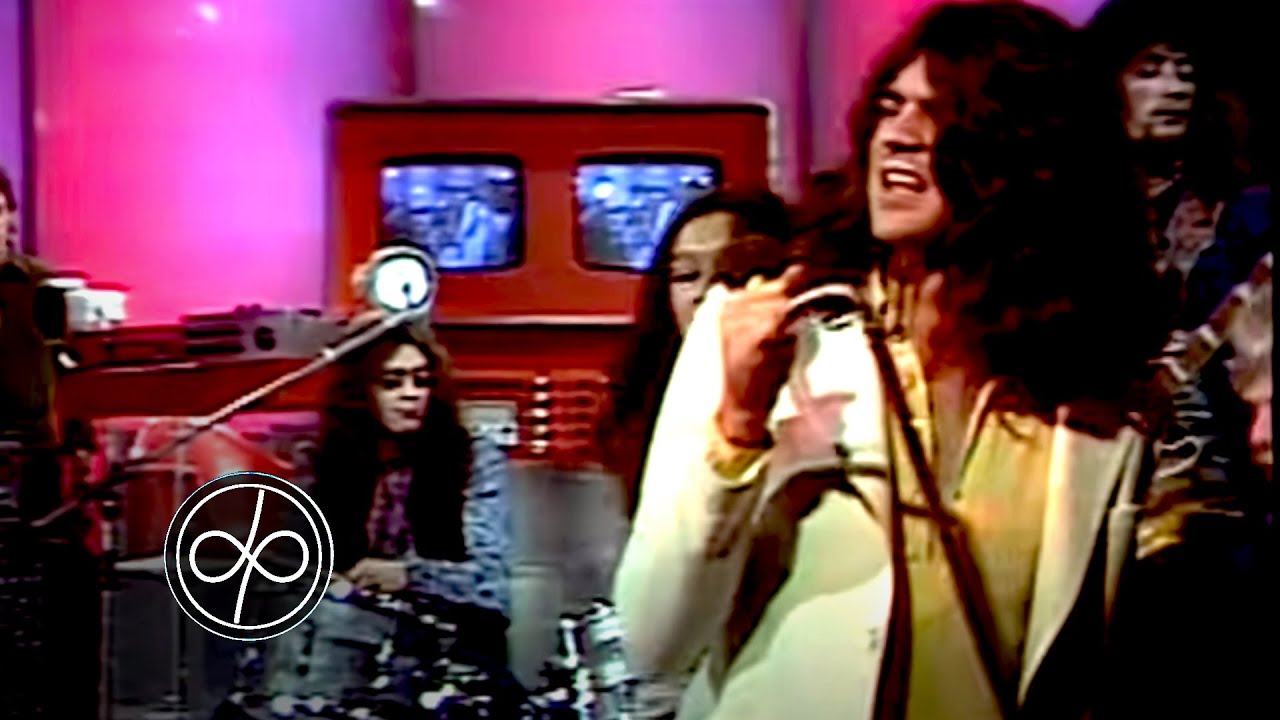
Other songs which pull the album in a more traditional direction still incorporate a subtle twist in the tale. No No No combines a woozy, almost narcotic slide guitar with one of Gillan’s most contrary lyrics – a string of questions (“Do we love each other?” “Is it getting better?”), all answered with an emphatic “No. No. No.”
Demon’s Eye is built around a deceptively simple blues-based riff, with a groove that showcases Glover’s agile bass lines. Lord sets off on an exuberant Hammond solo, and when it’s his turn Blackmore responds with a concise flurry of quicksilver blues licks, peppered towards the end with his signature whammy-bar flourishes. American audiences never heard this track on the original album, from which it was omitted to make room for the UK hit single Strange Kind Of Woman, creating two different versions of Fireball on opposite sides of the Atlantic.
The biggest surprise, musically, was Anyone’s Daughter, recorded during the very first sessions for the album. A light-hearted country shuffle complete with honky-tonk piano and a laddish lyric - “I won’t get no more eggs and water/Now I’ve laid the farmer’s daughter” – it divided opinion at the time and still does.
Lord dismissed the criticism with characteristic good humour. “It’s something different,” he said. “Why not?” Given the intensity of the rest of the material, the song indicates a band confident enough to puncture its own seriousness.
Released several weeks before Fireball and included on all subsequent CD and other reissues of the album, Strange Kind Of Woman hit No. 8 in the UK and became one of Deep Purple’s defining hit singles. It demonstrated the band’s ability to produce commercial records without diluting their musical ambitions. The song’s working title was Prostitute and Gillan’s lyric, said to be about a woman that he knew at the time, has not held up so well: “Her name was Nancy/Her face was nothing fancy…”

Critical opinion of the album was divided at the time. Melody Maker praised Fireball for possessing “all the consistency which was lacking in the brash rawness of In Rock, making for a much more satisfying album as a whole.” Disc enthused that the title track arrived in “blistering fashion... packing more into three minutes than most albums manage in 40.” The Rolling Stone reviewer, however, complained about passages of “aimless, extended studio jamming”, suggesting that In Rock had struck with greater force.
The band had mixed feelings about the album. “The impetus is never as strong as it is when you’re starving,” Paice told NME in January 1973. “When you’ve got nothing, you work your balls off. Around the time of Fireball we got a little too comfortable. Everybody had got to the stage where they had nice cars and houses. There wasn’t so much impetus to work and it showed on the album.”
Speaking in June 1973, Blackmore was regally dismissive of the way Fireball had been made. “It was a bit of a disaster,” he said. “It was thrown together in the studio. Managerial pressure - we had no time… ‘You’ve got to play here, here, there, then you’ve got to make an LP.’ I told them, ‘If you want an LP, you’ve got to give us time.’ But they wouldn’t. I just threw ideas to the group that I thought up on the spur of the moment.”
Gillan came to a different conclusion, later describing Fireball as his favourite Deep Purple album of that period because it opened up “tremendous possibilities of expression”, allowing Deep Purple to bring “the funk, the blues, the soul, the jazz and some of the psychedelic thing from our early days” into their hard rock framework.

Lord agreed. “The fact that it wanders slightly doesn’t worry me at all,” he said. “I love Fireball. I think it does good things. I think it goes to places that the band wasn’t expected to go to.”
History has largely vindicated the positive perspective. Fireball confirmed that the success of In Rock was no fleeting breakthrough and established Deep Purple alongside Led Zeppelin and Black Sabbath as part of the triumvirate of British hard rock bands of the early 1970s. Fireball continues to cast a long shadow as a stepping stone in the development of the band. As Jon Lord later observed: “You couldn’t have Machine Head without Fireball.”
Originally published in Classic Rock Presents: Deep Purple – buy it here
