




Opeth had spent 20 years on the Swedish metal scene when they turned their attention to their 10th album. But 2011’s Heritage wasn’t more of the same – to the horror of some fans, they toned down the aggressive growling vocals and distorted guitars, and embraced the prog tendencies they’d always hinted at. That year, band leader Mikael Åkerfeldt talked us through the process.
You could say it was inevitable. Album after album, the death metal roots from which Opeth sprang were trimmed away, exposing a beautiful progressive rock blossom. And while the aggressive growls and heavy distortion were still tangible in albums as recent as 2008’s Watershed, there were always hints that a later release could erase their metallic inclinations.
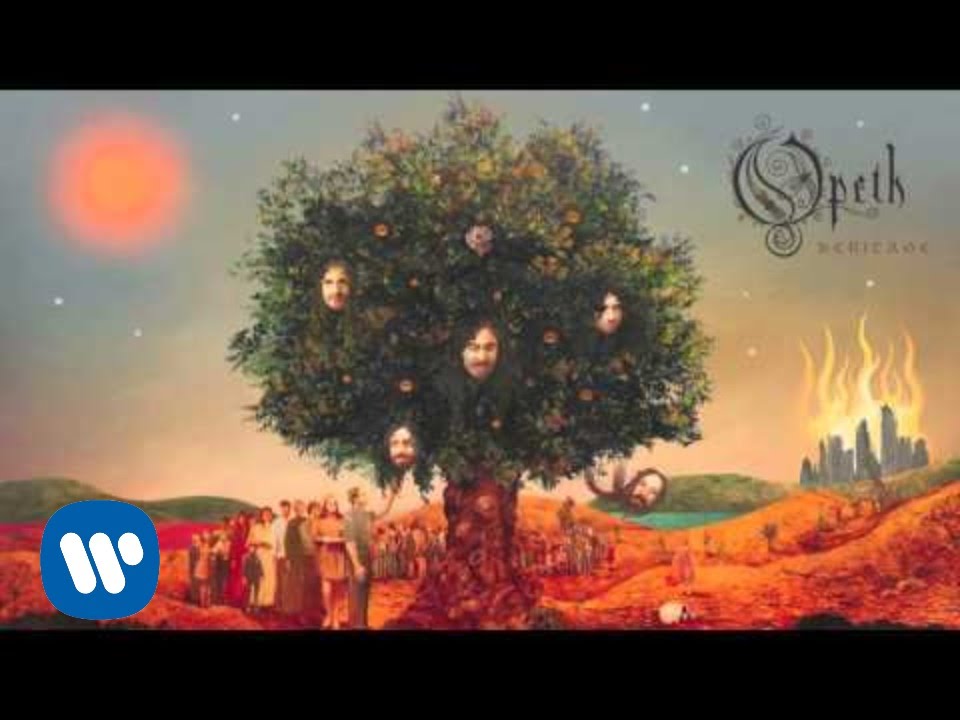
Those hoping for a sign of brutality need only look at the cover of Heritage to give up. The artwork is an open invitation to a musical odyssey steeped in prog rock – a bountiful tree rooted from the depths of hell, built around a pastoral landscape, a flaming city in the background and a pit of skulls beneath. It’s a mammoth leap from the gothic imagery of yesteryear. Pure and simple, it’s Opeth’s proggiest album to date. Mankind might feel the tremors, but the leap is but a small step for frontman Mikael Åkerfeldt.
“It feels, without sounding pretentious, like we’ve been working our way up to this point since the first album,” he explains. “I did start writing stuff that sounded like a continuation of the last album, but I was kind of fooling myself. I had two songs and I ended up deleting them after Martin Mendez said ‘Man, that’s not good!’ He was on the same wavelength as I was, pretty much, I just needed a second opinion to get a kick up the ass. So I scrapped everything and started from scratch. The Lines In My Hand was the first song I wrote for Heritage, then I wrote the rest of the stuff in six or seven months and it was easy. I didn’t stop and think – I just wrote it.”
Be warned: Heritage is almost devoid of metal. Gone are the distorted guitar riffs and drum machine-style pedal action that leant itself to the Swedish death genre out of which Opeth were born. Clearly a brave step for a band who have been deemed heavy for 20 years; and possibly one that’s detrimental to their metal fanbase. “You can’t worry about those things,” Åkerfeldt says. “I think some fans will be disappointed – but we’ve done experiments in the past. If you know your Opeth history, this isn’t an outrageous album at all.”
![Opeth - The Devil's Orchard [OFFICIAL VIDEO] - YouTube](https://img.youtube.com/vi/FxvN_GxgpF8/maxresdefault.jpg)
Åkerfeldt essentially calls the shots, but there are four others in the merry band of brothers; and guitarist Fredrik Åkesson’s thoughts on the move from metal must be worth hearing. In fact, he’s in accordance with Åkerfeldt’s choice. “When I heard about the album I knew there wasn’t going to be any growls, and there’d be less distortion on the guitars and bass. The metalhead in me was like, ‘Are you really sure about that?’ but when I heard the stuff I was like, ‘Yeah, that’s a really cool vision!”
By shifting the focus from brutality to prog-drenched experimentation, Heritage opens up a new world to both fans and the musicians who play on the record. Without the oppressive effect of distortion, there’s leeway for other elements of the band’s sound to shine – especially for drummer Martin Axenrot.
“This time round everyone has their own space, especially Martin; he’s been aching to do an album like this fore ver,” says Åkerfeldt. “He’s only been known for his metal drumming but, he actually started out in a marching band and his drumming idol is Ian Paice. He’s never really had enough credit. So he’s all over this album doing rock, fusion, jazz and heavy metal. It’s great that every musician is there.”
Joining Opeth on Heritage are two notable guest musicians – Peruvian-born percussionist Alex Acuña from Weather Report and flautist Bjorn J:son Lindh, who’s worked with Mike Oldfield among others. “Alex was a bit of a coincidence,” says Åkesson. “A guy who was helping us with the drums knew we needed help with a percussion part, and also knew that Alex was in town for a drum clinic, so he told us about it. Alex is like, only the best percussion player in the world, so it was perfect!”
Lindh wasn’t so easy a coup; the band tried and failed several times to get him to play flute. But as he was in Stockholm when they were recording, he agreed to pop by.. Or As Åkesson puts it: “he did two takes then pissed off!” Perhaps unsurprisingly Lindh wasn’t the only famous flute player that Opeth had in mind for the record.

“I did email Ian Anderson but I never heard back. Funnily enough, when I went down to Steven Wilson’s place to mix the album, he says, ‘I just got an email from Ian Anderson. He just wants me to look into mixing Aqualung!’ But I’m really happy in retrospect that we have Bjorn, because it fits with the vibe of the record.”
One musician will not be revelling in the glee afforded by Opeth’s newest endeavour. Earlier this year long-standing keyboardist Per Wiberg left the band, the reasons for which may never be clear. Åkesson recalls Wiberg saying he’d “lost the joy of playing music” – but Åkerfeldt can’t help but feel there was something more personal involved: “I don’t think he felt comfortable with me having the final say on things,” says the band leader. “In fact, sometimes I felt like he despised me. He was calling up the other guys and going out to bars with them, but he never called me. We used to be really good friends.”
I asked Per, ‘Would you have left anyway?’ and he said, ‘Yes.’ That made me feel a lot better
Animosity doesn’t make the task of firing someone any easier. Åkerfeldt recalls giving his dispirited keyboardist his marching orders: “I fired him, and I got terrible panic attacks after that. I was doing it through email because I was bitter and angry. Then we started emailing back and forth. He’d never said more heartfelt stuff than he did in those emails. So I asked him, ‘Would you have left anyway?’ and he said, ‘Yes’. That made me feel a lot better.”
He’s delighted with the contributions of ex-Yngwie Malmsteen keyboardist Joakim Svalberg. Although not necessarily a permanent fixture (Åkerfeldt prefers to “take things slow”) the new recruit is already proving a hit. Anyone in attendance at recent gigs will testify to his pristine vocal parts. “Our voices fit together better than Per’s,” Åkerfeldt says. “But then Joakim’s very professional in that sense. He’s not going to do anything half-arsed. He’s so prepared. He knows all the lyrics – even I forget the lyrics! – all the harmonies, and he’s really into it.”
The band are certainly making the most of Svalberg’s prowess. The opening bars of Heritage are a sparse and delicate piano piece more befitting a woeful interlude than an album’s introduction. But like the cover art, it serves as a blatant indicator that Opeth are doing something different this time. It’s more than just a ‘less metal’ version of the band; you’ll find cheeky folk ditties, vocoder passages and ominous tribal drums conveying menace in equal measure – but in an entirely different way than in the past.
“I’ve never been a big fan of happy, uplifting music. But I think sorrowful music can be uplifting,” muses Åkerfeldt. “With the production of this album it was easy to bring those things forward musically. If you do the metal thing, the few emotions that are in there come from aggression; this time it was easier to tap into more profound feelings.”
Talking tabout his thoughts on the state of the current music scene, it’s evident that he feels uninspired by today’s metal offerings. “We’re the biggest metal fans ever, and that’s why we get a bit pissed off. The contemporary scene doesn’t really offer me anything right now. I take all my inspiration from older bands.” Which might be why Heritage is their least metal album to date. Åkerfeldt’s musical interests include metal, jazz and folk, but he also attributes influence from a person who’s proved integral in Åkerfeldt’s professional and personal life.
I was listening to Rainbow Rising and my eyes were tearing up. I was like, ‘How is this possible?’
“Steven Wilson played me an album by David Crosby that I hadn’t heard – his first solo album If I Could Only Remember My Name – and it blew my mind. It’s a jamming kind of record but it’s got the crème de la crème of the West Coast scene. Recently I went for what I like to call ‘an old man’s walk,’ where I go out and listen to music. I was listening to Rainbow Rising and my eyes were tearing up. I was like, ‘How is this possible? I’ve heard this a million times!’ Now it means more to me than ever. It’s those types of records – Rainbow’s Rising, Judas Priest’s Sin After Sin – I listen to a lot.”
There’s no doubt that Opeth will continue to reinvent their wheel at every turn. “A lot of people, once they have a career, get afraid of their own creativity,” Åkerfeldt muses. “They think they’re going to lose their jobs if they get creative. But I think our career is based on doing what we want, because that’s what we’ve always done.”

